
Birdwatching in Raja Ampat: endemic birds and forest habitats
Conservation status matters: the Red and Wilson’s birds-of-paradise are assessed as Near Threatened, not Endangered. Their limited ranges and forest dependence make responsible viewing important. Other striking birds recorded around Raja Ampat include Blyth’s hornbill, palm cockatoo, Eclectus parrot, red-cheeked parrot, western crowned pigeon, kingfishers, sea eagles and frigatebirds. Records indicate where a species occurs regionally, not a guarantee for every island or trail.
Places & experiences
Waisai is a practical base for land-based birdwatching on southern Waigeo. Warkesi forest near town offers guided observation of red and Wilson’s birds-of-paradise. Arrange transport, a local guide and access in advance; this is a forest visit, not a bird display at the port.
Saporkren on southern Waigeo is another base for red and Wilson’s birds-of-paradise. Their observation sites are different: red birds display in trees, while Wilson’s males use a forest-floor court. Ask which sites are active, how steep the walk is and whether viewing shelters are available. Sightings are never guaranteed.
Waigeo and Gam support parrots, cockatoos, pigeons and hornbills as well as birds-of-paradise. Search forest edges, fruiting trees and village surroundings with a guide. A species recorded on an island is not necessarily present on every trail; ask for recent local observations rather than a guaranteed checklist.
Along Waigeo’s coast and nearby islands, look for sea eagles, kingfishers, frigatebirds and terns. On Kri, island walks can reveal kookaburras, manucodes, honeyeaters and scrubfowl. Coastal observation can suit a gentler outing, but shoreline access and forest paths still vary.
Birds & observation areas
These are selected birding targets and regional records, not a complete species inventory or a promise of sightings. Exact trails, display sites and access can change. Choose a guide for your target species and allow time for quiet waiting; dawn is common for dedicated birding, but the guide should set the actual time.
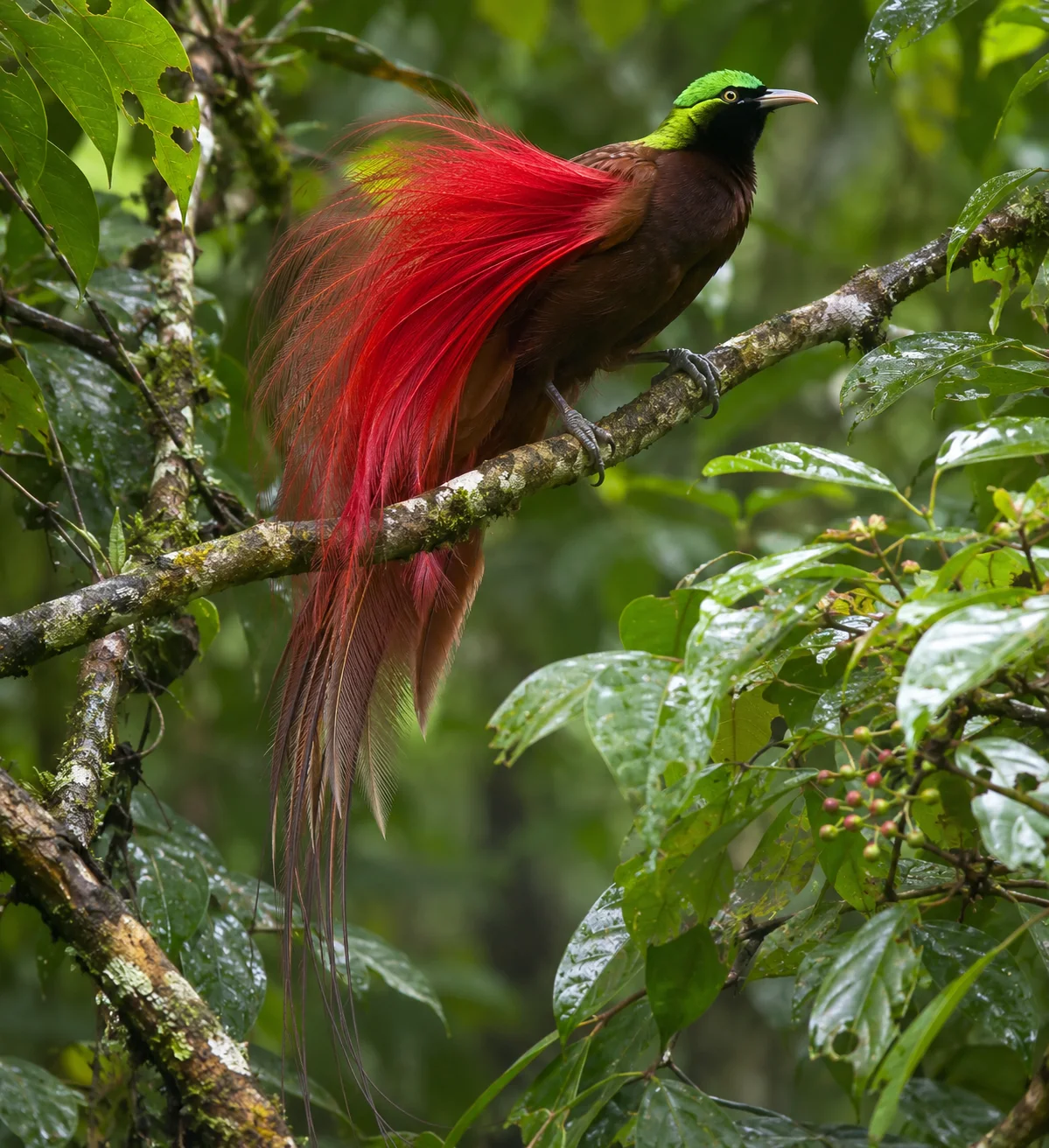
Red bird-of-paradise
Paradisaea rubra
Endemic to Raja Ampat. Join a village guide before sunrise and wait quietly at an active forest display tree; males often perform around first light, roughly 05:30–07:00 depending on season and site. The male’s long red flank plumes are usually high in the canopy. No flash or playback.
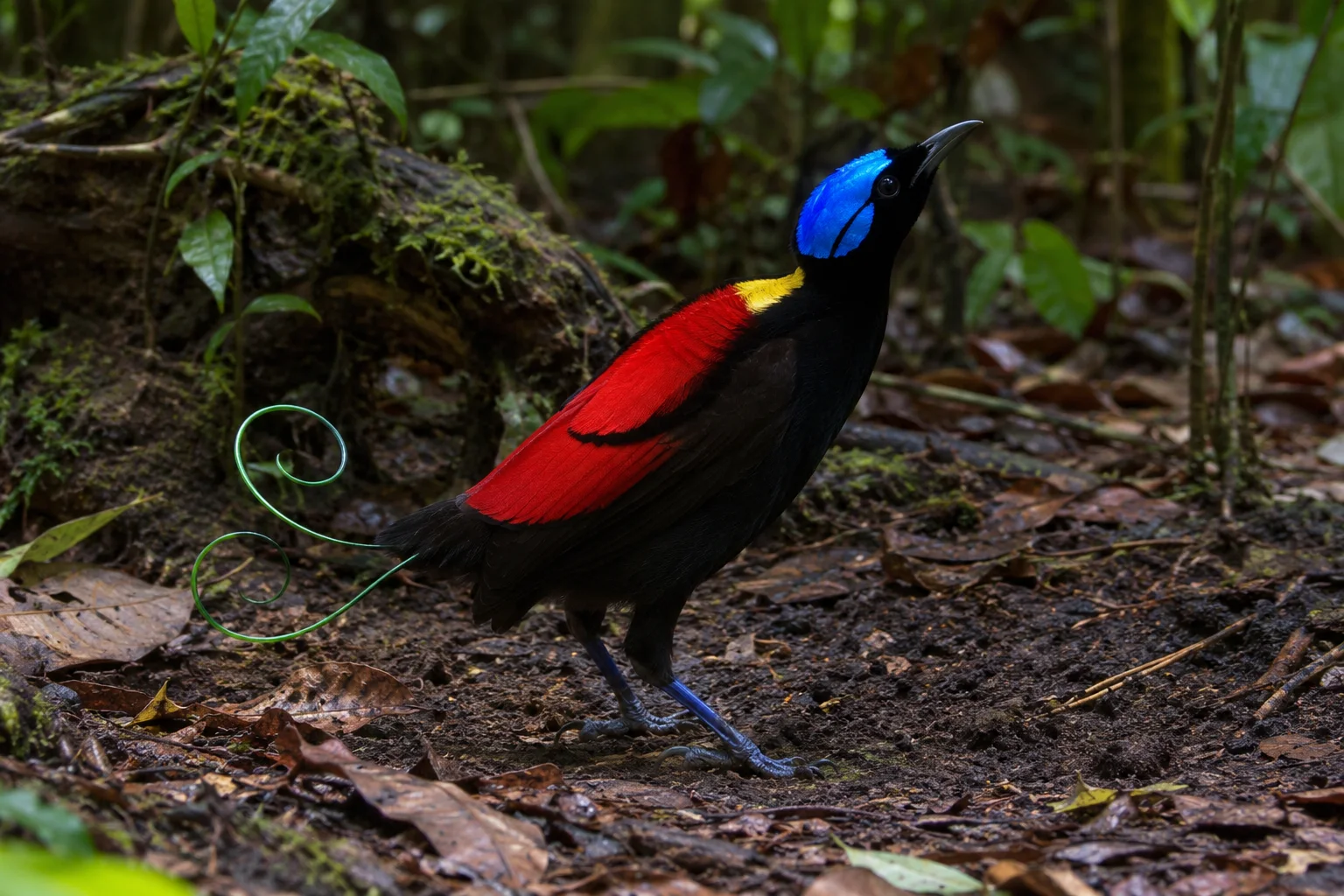
Wilson’s bird-of-paradise
Diphyllodes respublica
A Waigeo endemic whose male displays at a cleared court on the forest floor. The walk commonly starts in darkness so visitors can wait quietly for first light, when display activity is most likely. Use the guide’s hide or waiting area; do not approach or enter the court.
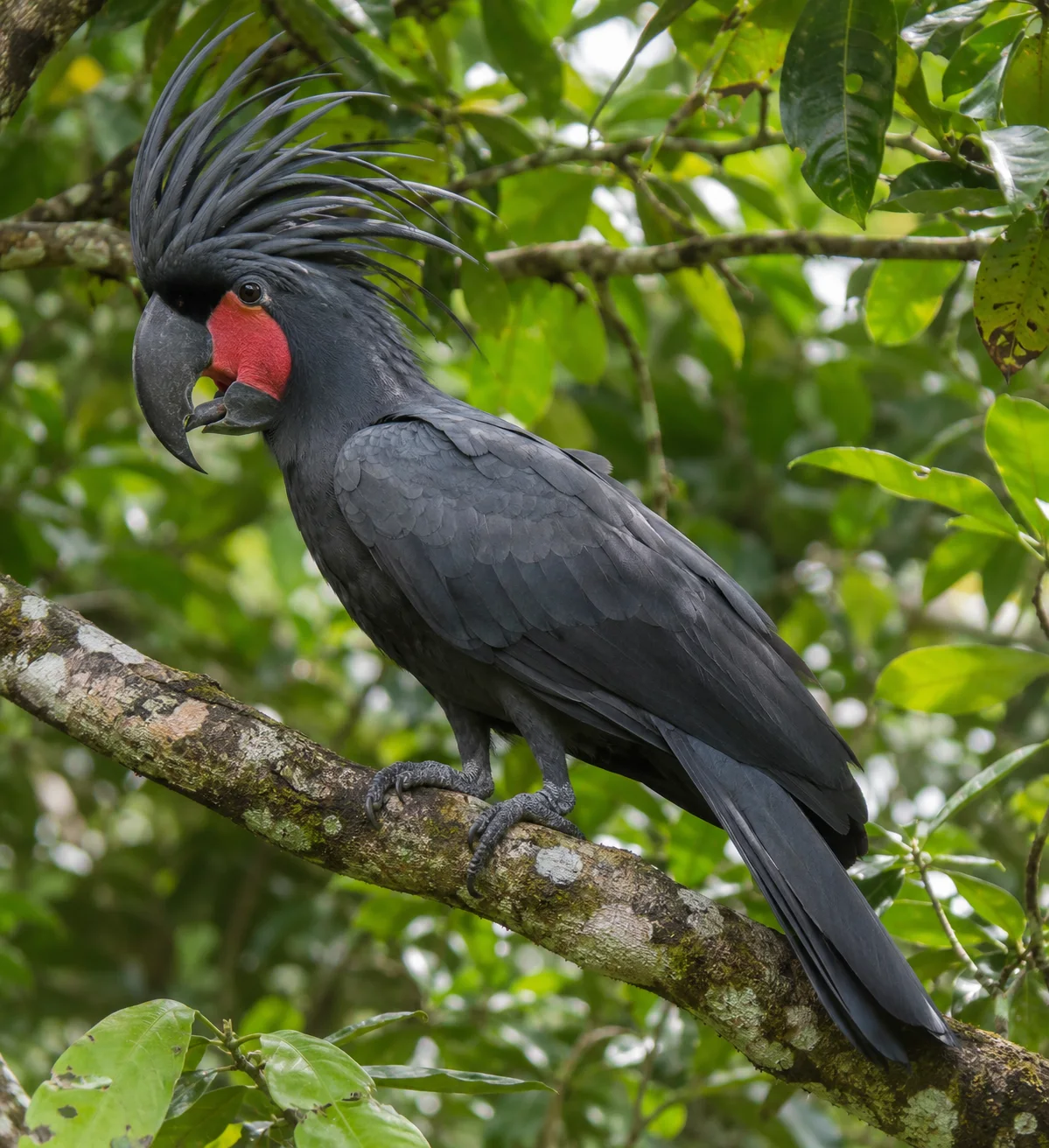
Palm cockatoo
Probosciger aterrimus
Listen around dawn and late afternoon for loud calls from mature forest trees and forest edges; scan high branches for the large dark cockatoo and its red cheek patch. Ask a guide about recent feeding activity and keep away from nest trees.
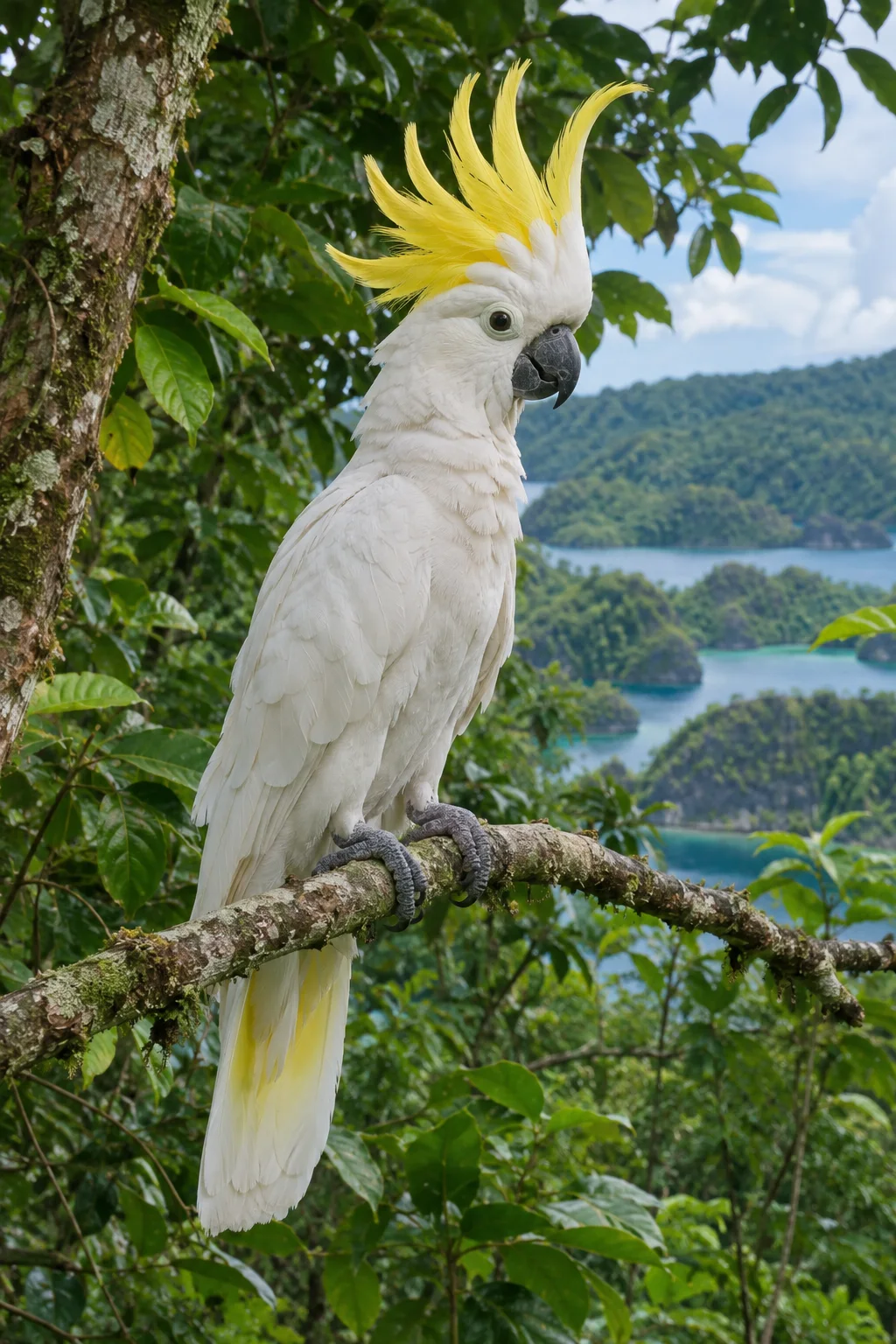
Sulphur-crested cockatoo
Cacatua galerita
Often heard before seen. Search forest edges, open woodland and village gardens in daylight, especially early morning when birds commute and call. Look for the yellow crest in pairs or small groups; keep a respectful distance.
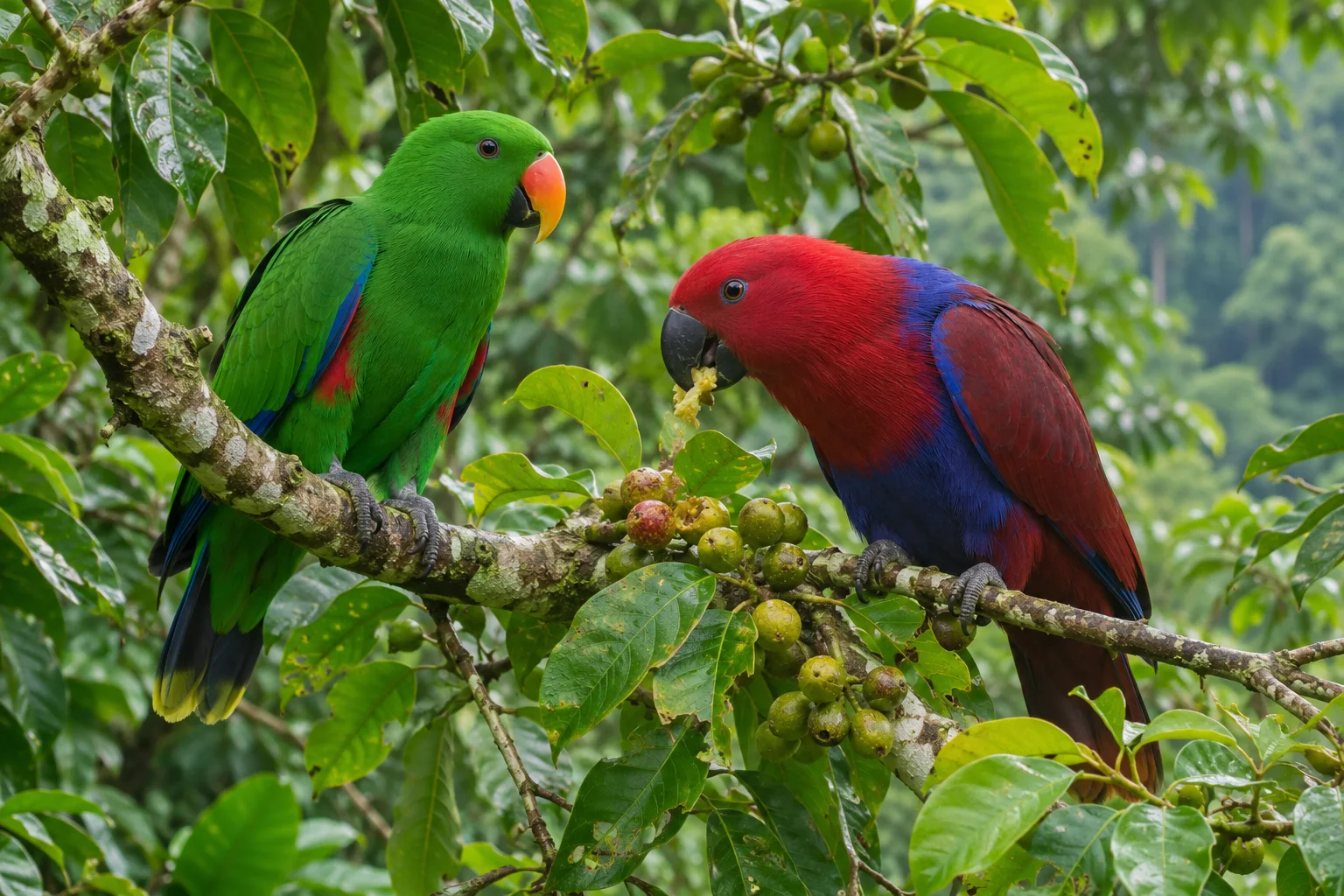
Eclectus parrot
Eclectus roratus
Check fruiting trees and canopy edges in the early morning or late afternoon, when parrots may feed or move between roost and feeding areas. Males are green; females are red and blue. Stay on the trail and do not approach nests.
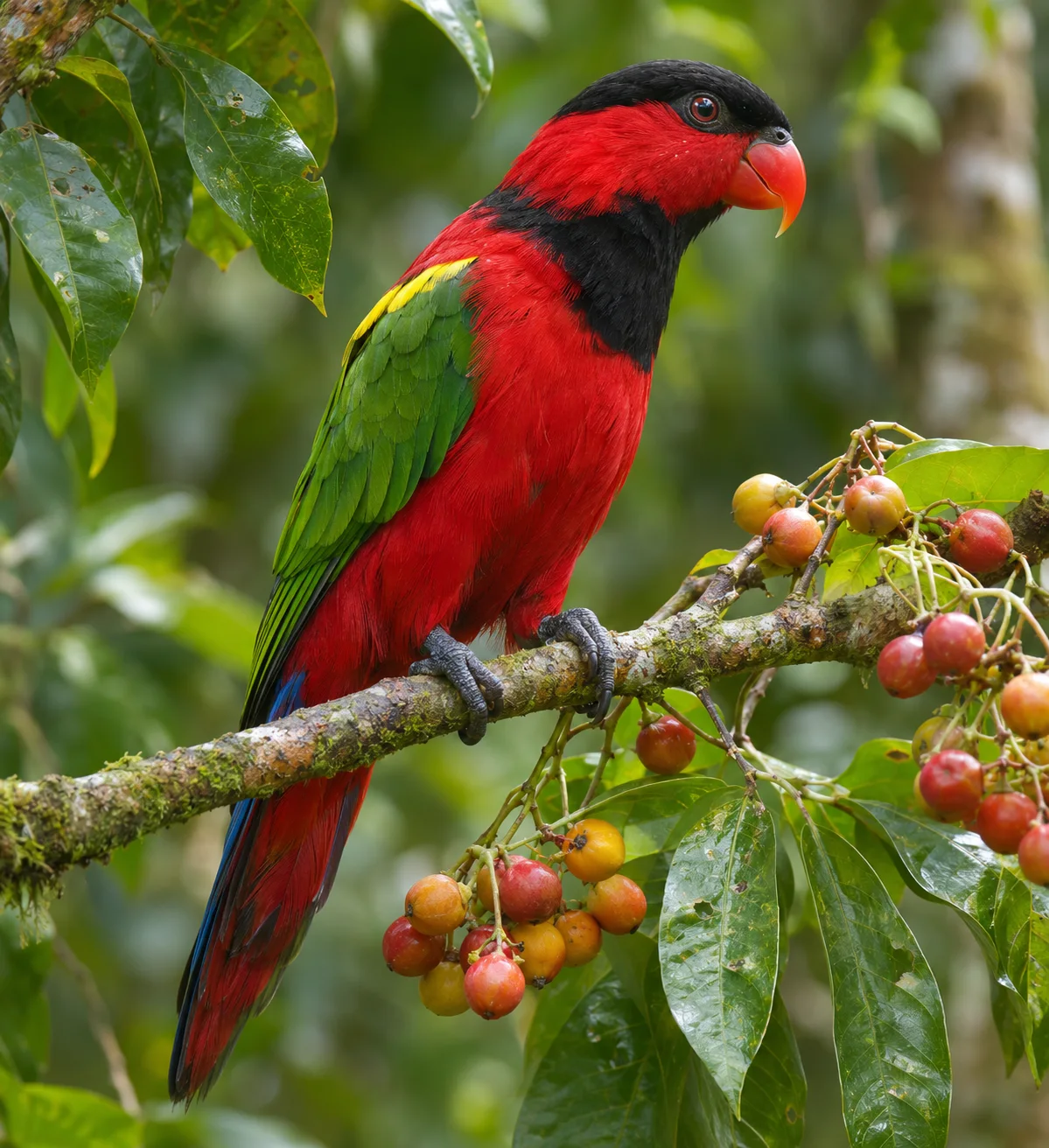
Black-capped lory
Lorius lory
Listen for calls and scan flowering or fruiting canopy during the cooler early hours and late afternoon. The red body and dark cap can be difficult to see among leaves; a guide can identify flight calls. Do not follow birds into nesting trees.
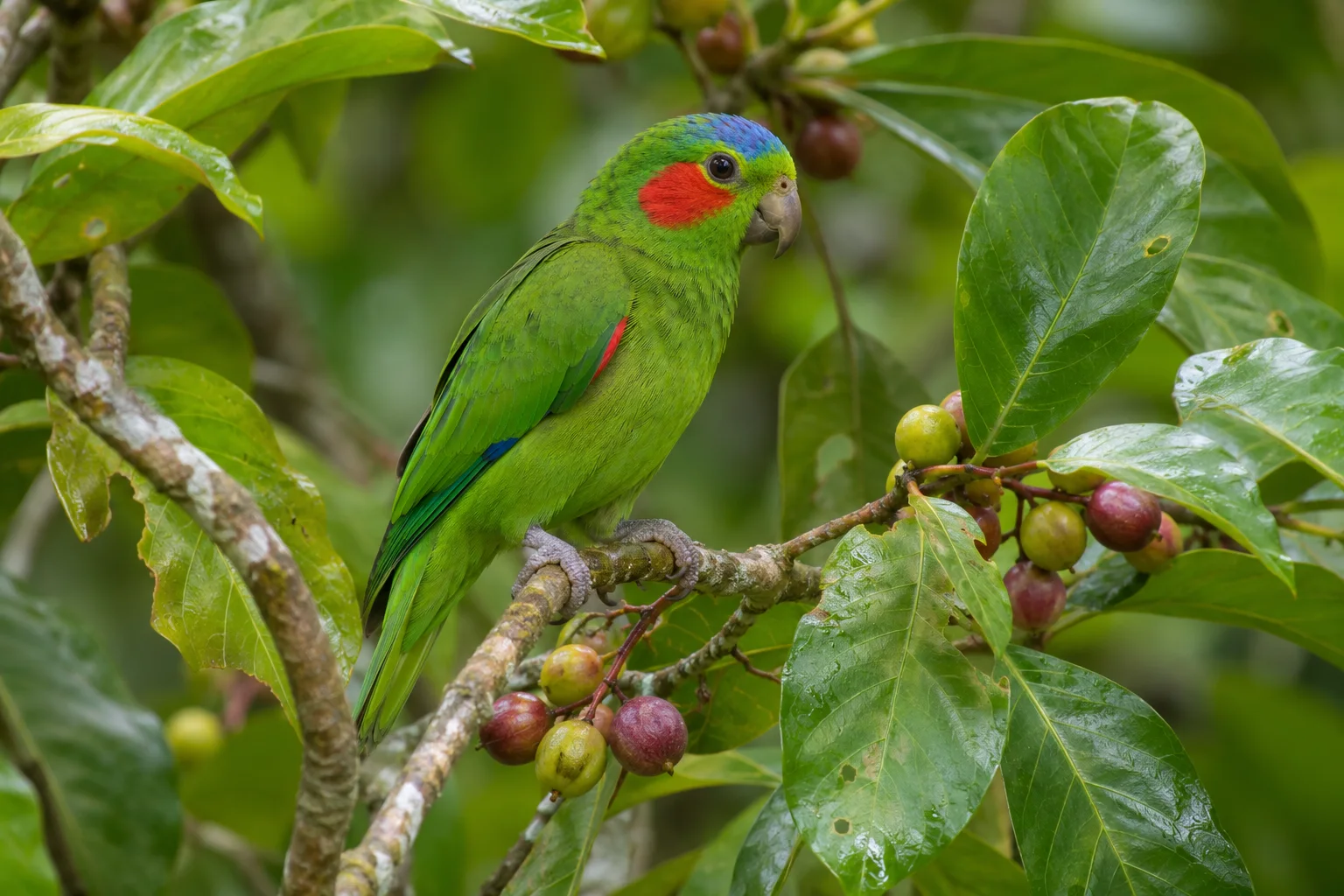
Red-cheeked parrot
Geoffroyus geoffroyi
Best searched for in daylight, especially early morning, by listening for fast calls and watching short flights above forest edges, gardens and fruiting trees. Pause and scan rather than following a flock.
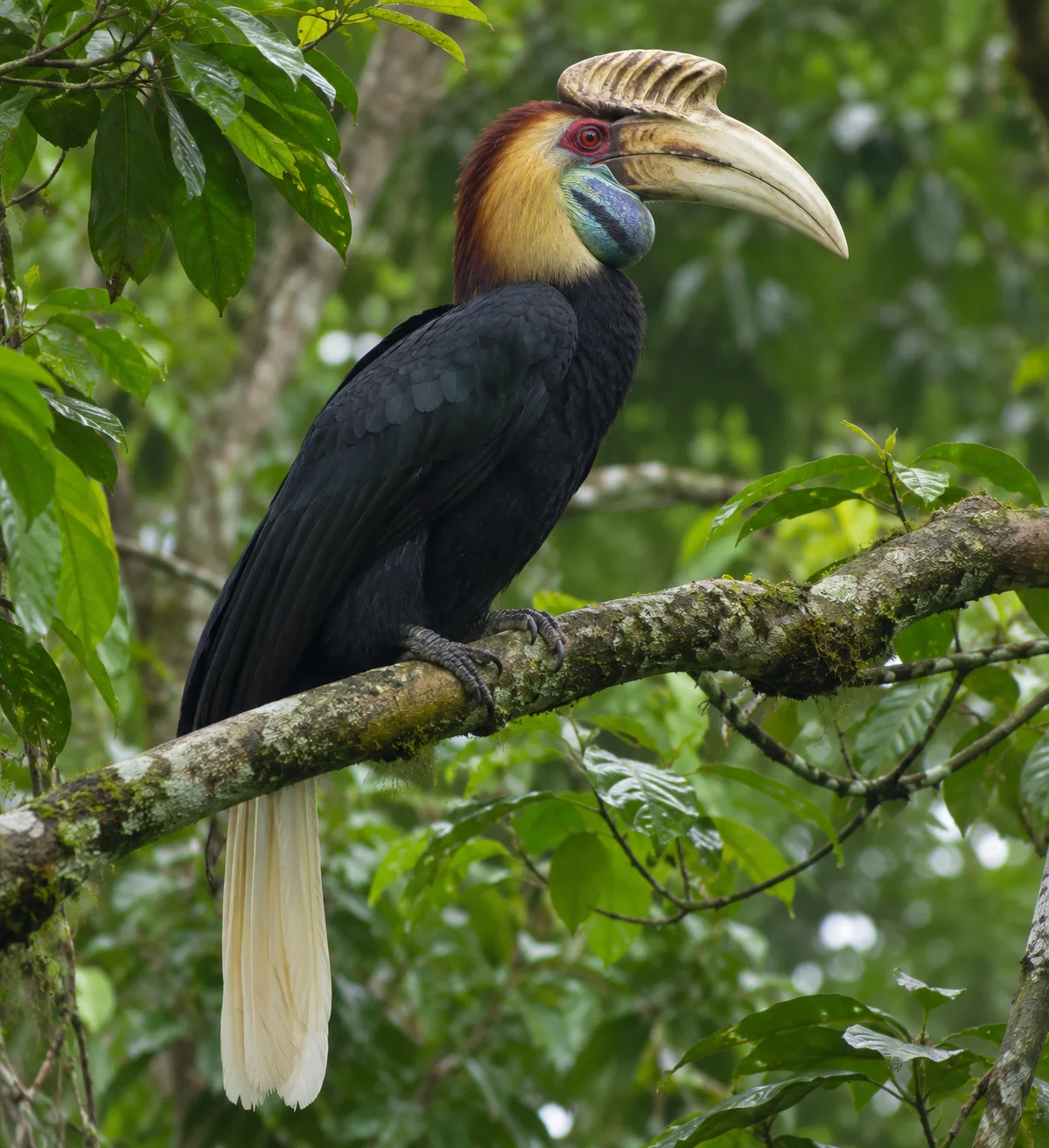
Blyth’s hornbill
Rhyticeros plicatus
Look and listen in daylight, particularly early morning and late afternoon, along forest edges and above fruiting trees. The large silhouette and wing noise can reveal birds crossing the canopy. Do not approach nesting hollows.
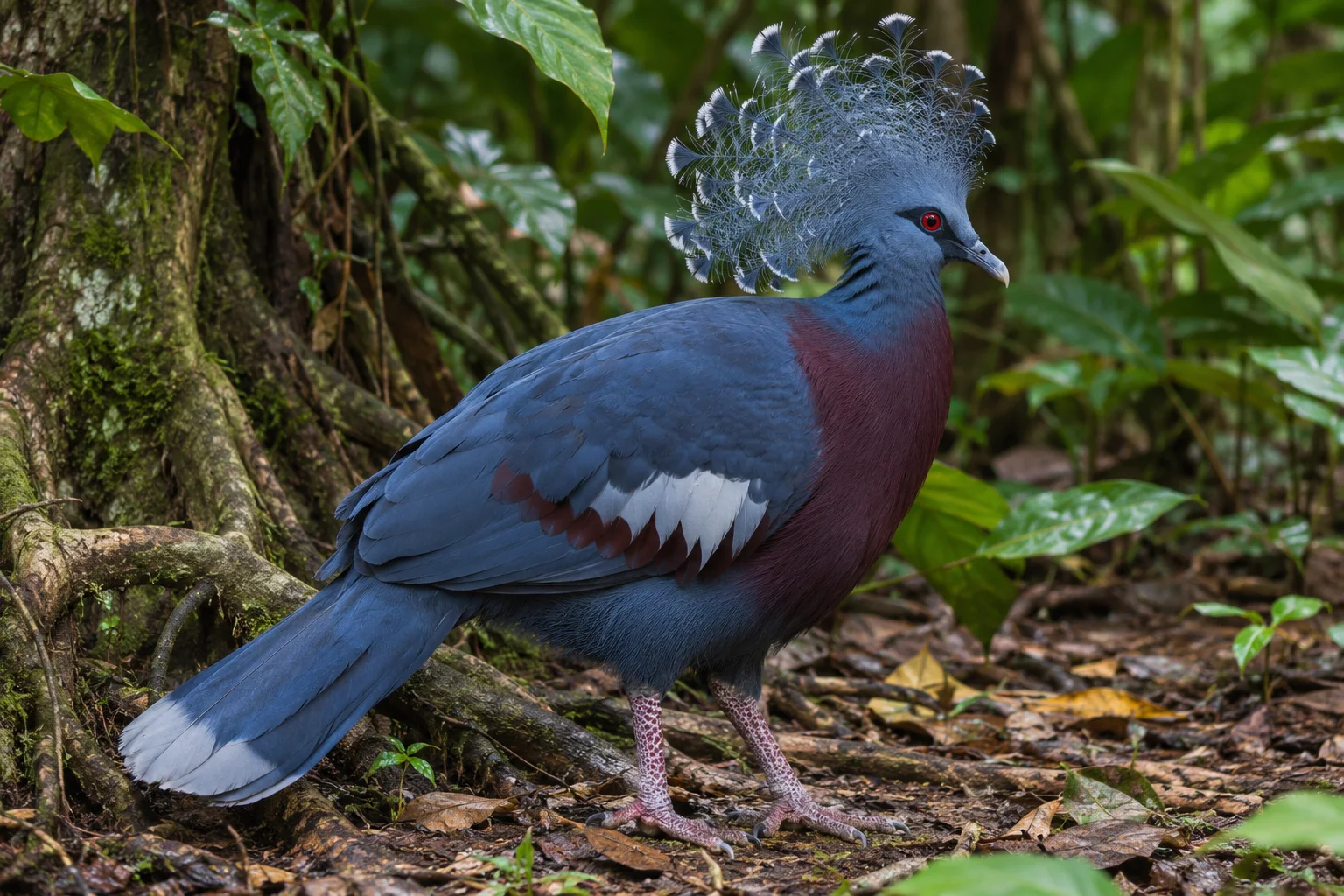
Western crowned pigeon
Goura cristata
Walk slowly on shaded forest trails in the early morning, listening for movement on the forest floor and checking quiet feeding areas. This ground pigeon can freeze or walk away before it flushes; never pursue it.
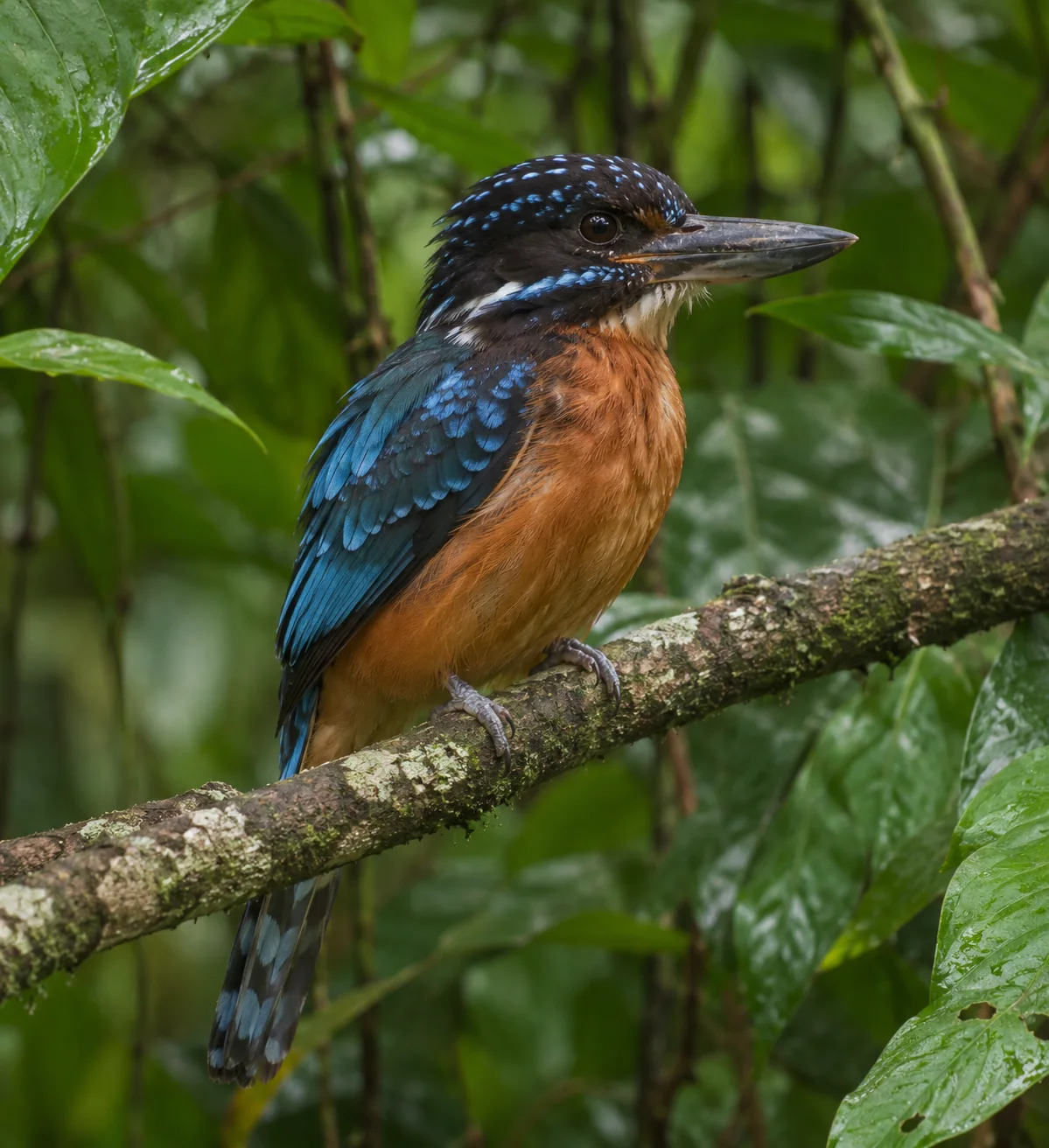
Rufous-bellied kookaburra
Dacelo gaudichaud
Search in daylight along shaded forest edges, clearings and low branches. It often waits quietly before a short hunt, so pause and scan perches; dawn is a useful time for a guided walk, but activity varies.
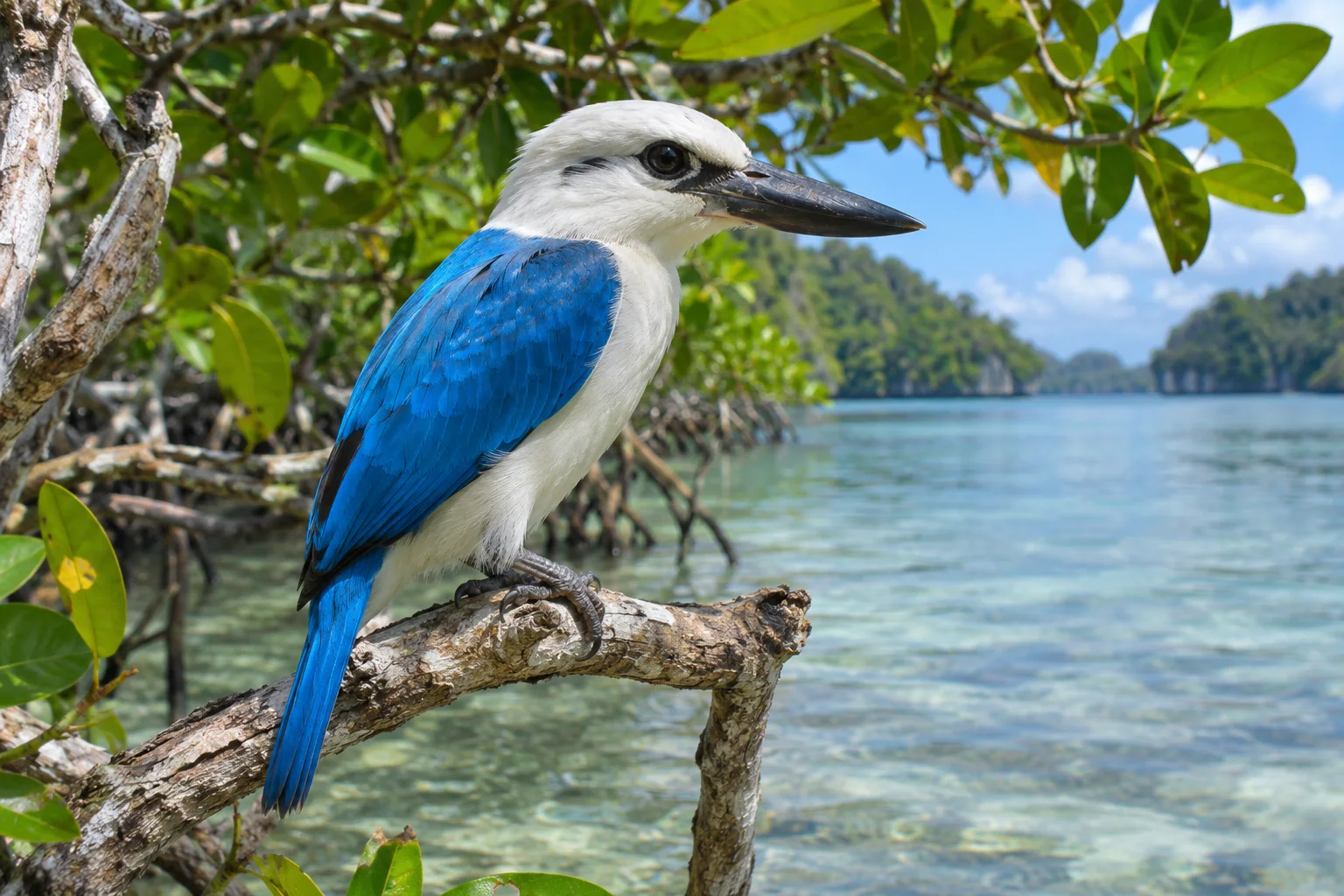
Beach kingfisher
Todiramphus saurophagus
Watch in daylight from a quiet shore or boat near mangroves, beach trees and reef edges; scan exposed perches for a kingfisher watching fish or crabs. Avoid approaching its perch or nesting area.

White-bellied sea eagle
Haliaeetus leucogaster
Scan bays, reef channels and coastlines during daylight for a large eagle soaring or perched above the water. Mid-morning thermals can make soaring birds easier to spot, but sightings depend on weather. Never approach a nest or roost.
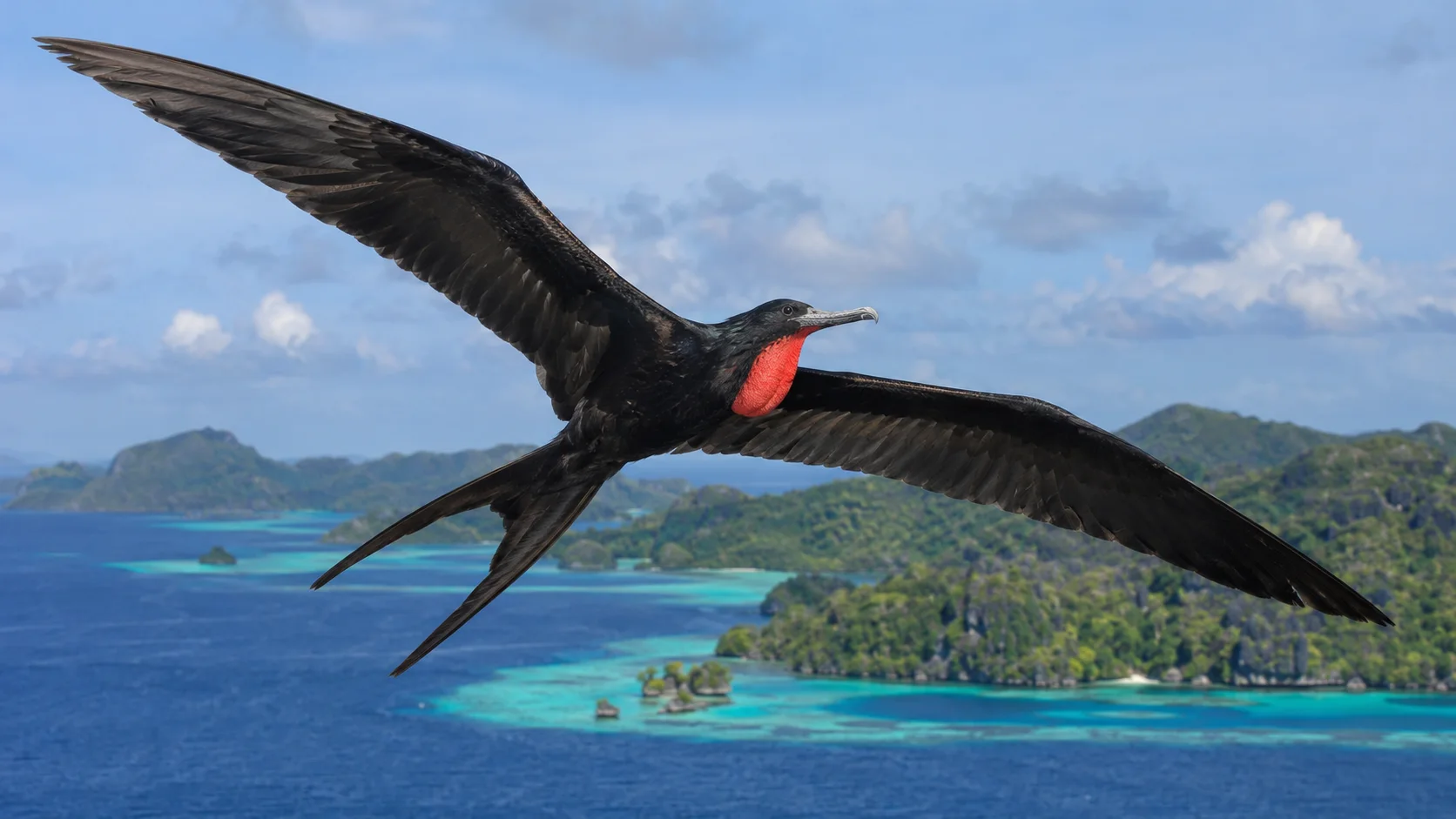
Lesser frigatebird
Fregata ariel
Look over open channels and coastal waters during daylight, especially when birds soar on sea breezes or gather above feeding activity. Identify the long angular wings from a boat or shore; do not approach colonies or roosts.
Malagufuk birdwatching from Sorong
Malagufuk is a forest village in the Klasow Valley, Makbon District, Sorong Regency, on mainland Southwest Papua. It is a separate mainland trip, not an island in Raja Ampat. The Klasow lowland rainforest and community-managed trails are known for birds-of-paradise and other New Guinea forest birds.
From Sorong, arrange a local 4WD vehicle and guide to the Klasow Valley trailhead; published itineraries describe roughly 1.5 hours by road, but road and weather conditions change. Continue on foot along a wooden forest walkway for about 3.3 km to Malagufuk. Sections may be slippery or damaged, so confirm current conditions, walking time, luggage help, village access, guide fees and accommodation directly with the community before departure. Staying overnight makes a pre-dawn birding walk practical.
Birders may look for King, Lesser and Twelve-wired birds-of-paradise, Magnificent riflebird, trumpet manucode, Northern cassowary, Blyth’s hornbill, parrots, fruit-doves, kingfishers and other lowland forest species. Which birds are seen depends on season, fruiting trees, weather and local knowledge. The species portraits below are illustrative; they identify target species and are not photographs of Malagufuk sightings.
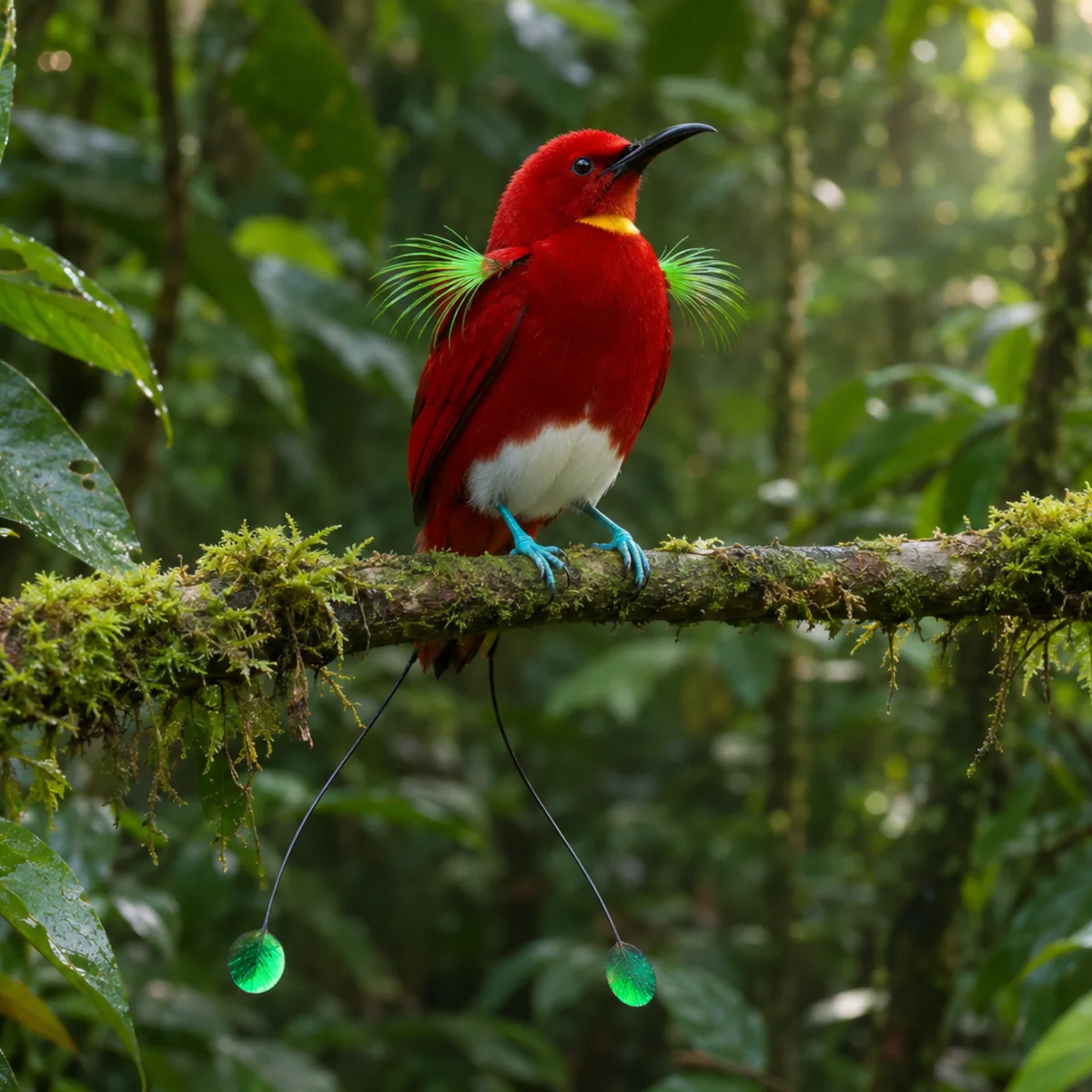
King bird-of-paradise
Cicinnurus regius
A very small, vivid bird-of-paradise. At first light, wait quietly with a local guide near an active lowland-forest display tree; the male may show red plumage, emerald-tipped shoulder plumes and paired tail wires. Malagufuk is mainland New Guinea, not Raja Ampat.
Open map · Malagufuk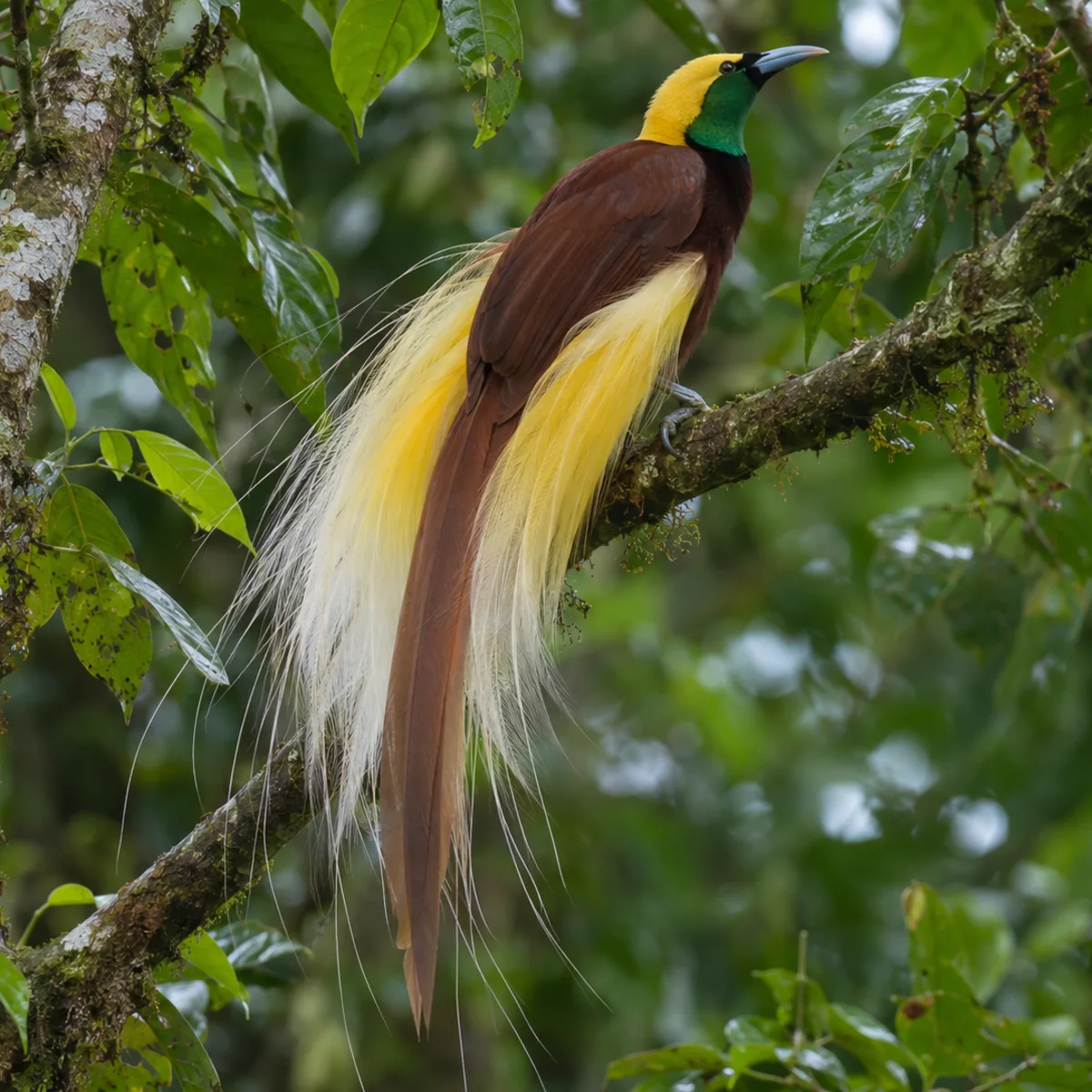
Lesser bird-of-paradise
Paradisaea minor
A large bird-of-paradise with a yellow crown and long flank plumes. Start before sunrise and wait quietly near a guide-approved display tree; activity is most likely at first light and varies by site and season.
Open map · Malagufuk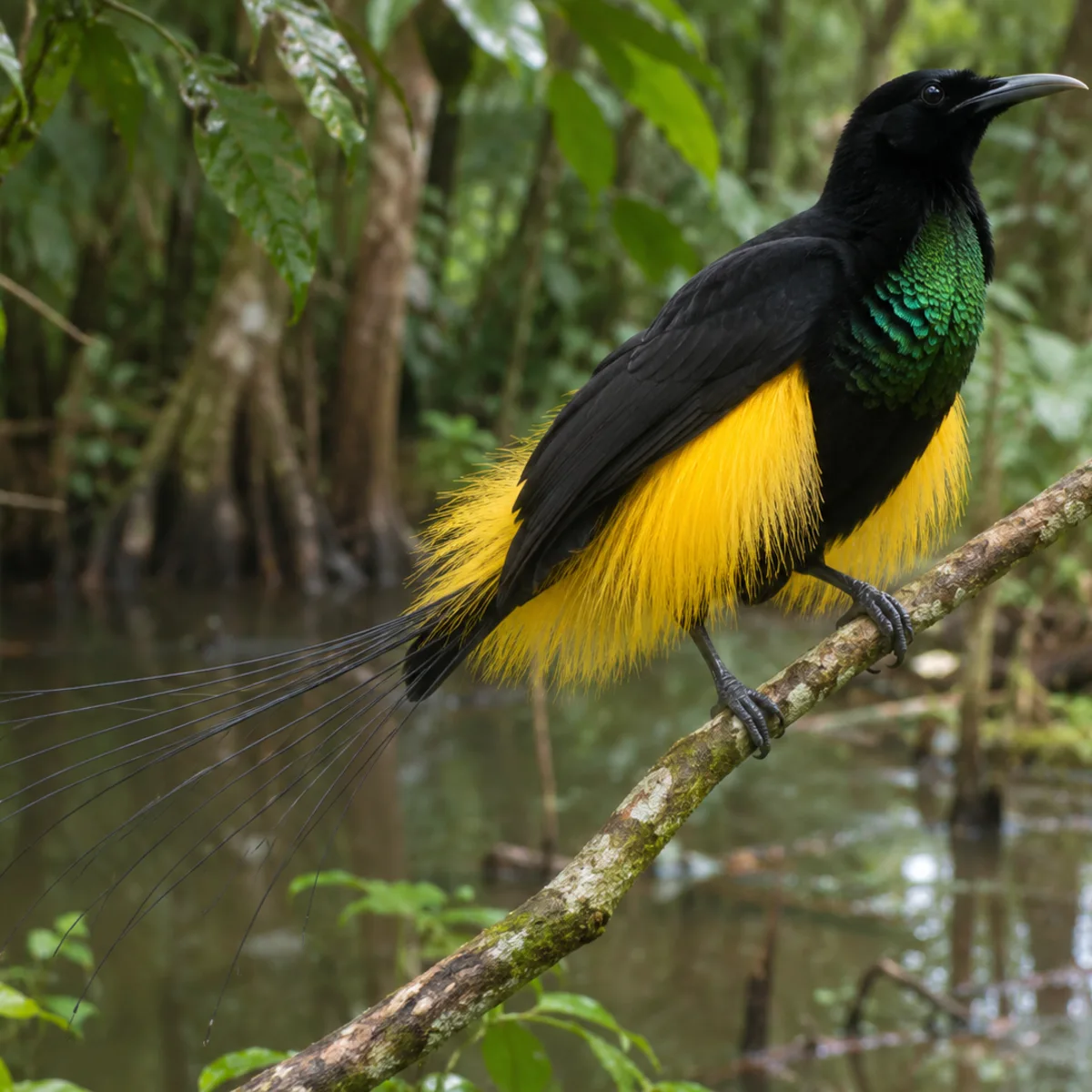
Twelve-wired bird-of-paradise
Seleucidis melanoleucus
The male has a dark body, yellow flank plumes and wire-like feathers. Ask a guide about lowland forest or swamp-edge sites; quiet early-morning waits near a display perch are more useful than walking after the bird.
Open map · Malagufuk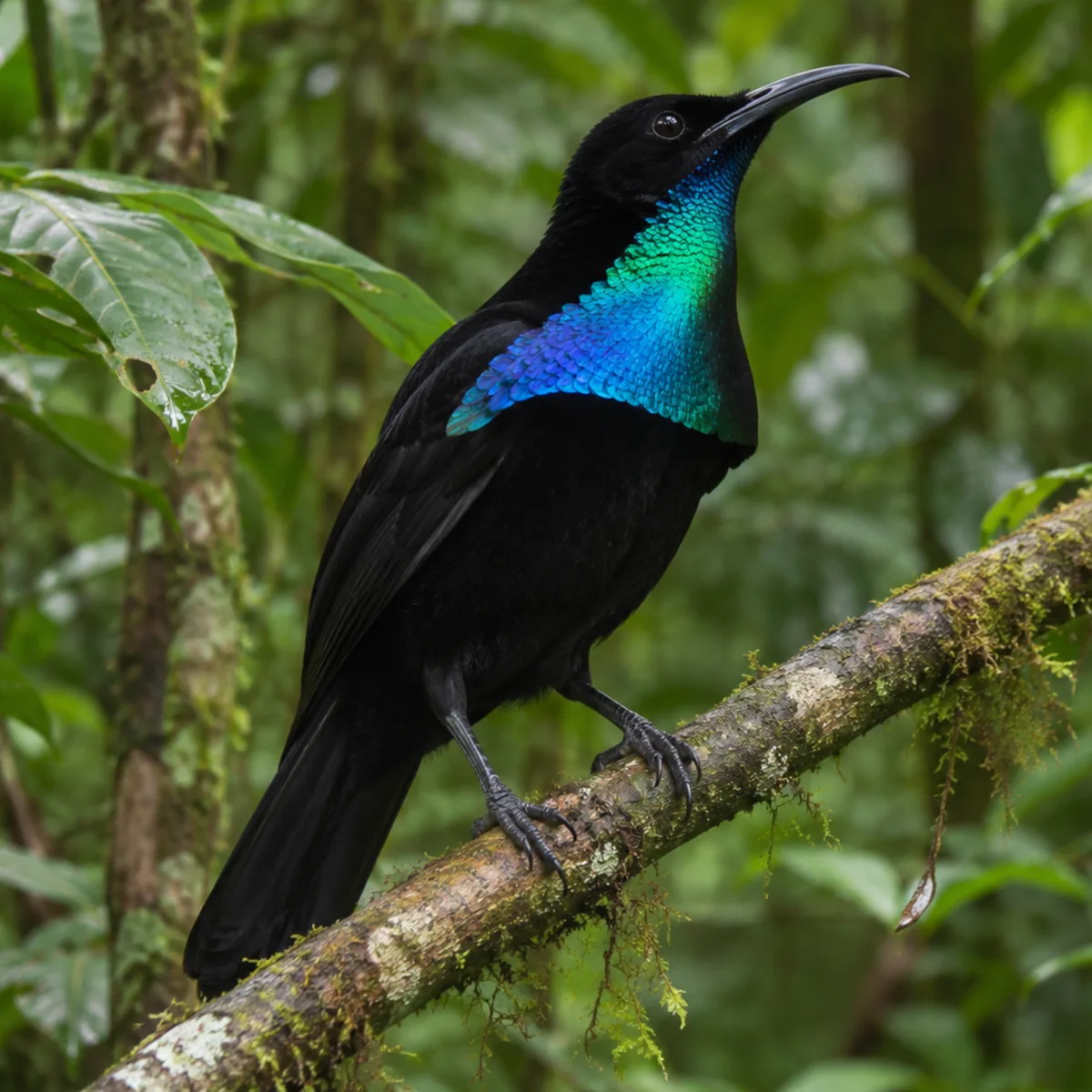
Magnificent riflebird
Ptiloris magnificus
A glossy, dark bird-of-paradise relative; the male has an iridescent blue-green throat shield. Walk forest trails at first light and pause near suitable display branches; a guide can identify calls and active areas.
Open map · Malagufuk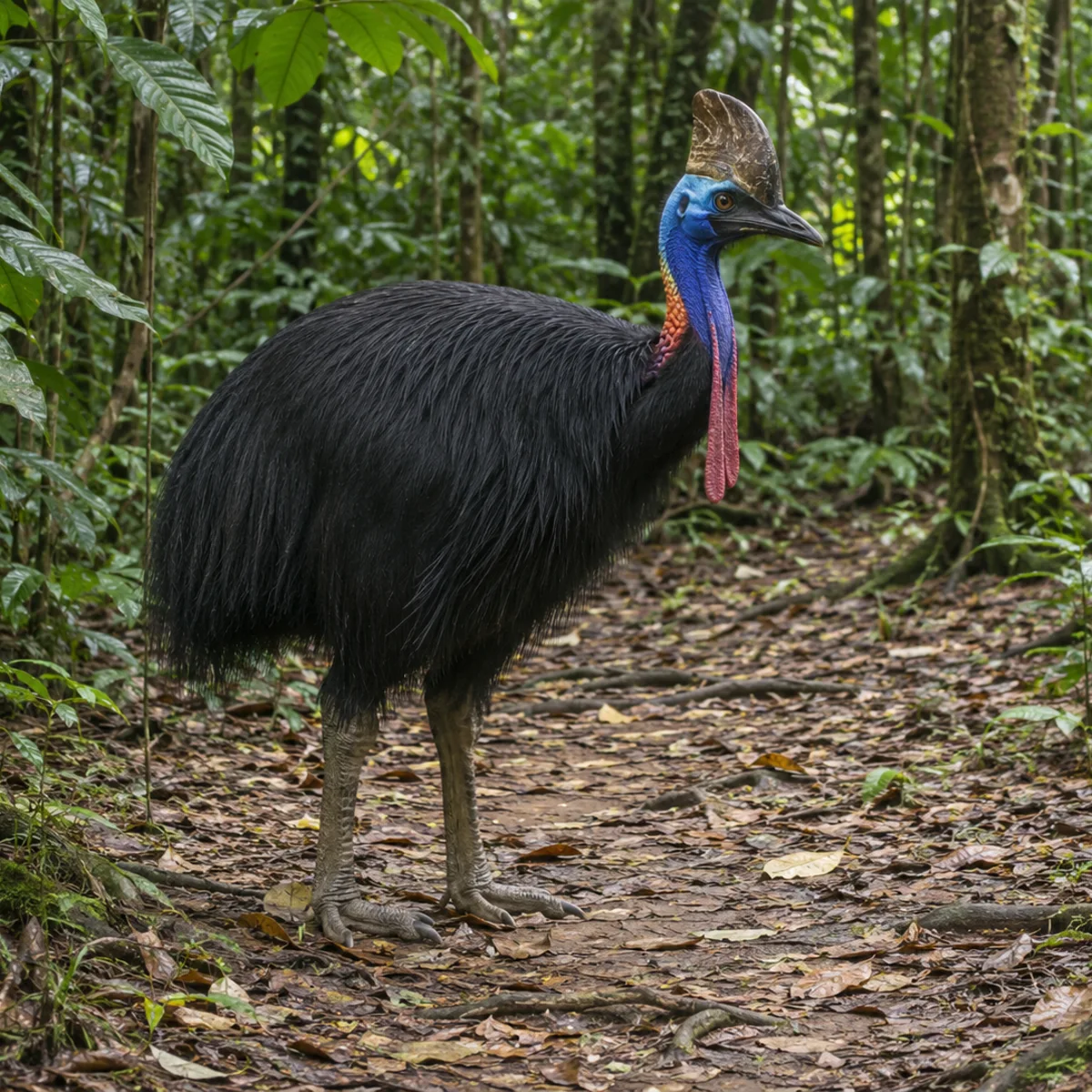
Northern cassowary
Casuarius unappendiculatus
A large, flightless forest bird with a tall casque and vivid blue neck. It may occur in lowland forest at different hours, but sightings are unpredictable. Keep well away, never approach or feed it, and follow the guide’s safety instructions.
Open map · MalagufukBirdwatching from Waisai: Warkesi and Saporkren
Waisai is a practical base for forest birding on southern Waigeo. Arrange a local guide and road transport to Warkesi or Saporkren before dawn; forest tracks, access permissions and display locations can change. Red and Wilson’s birds-of-paradise are the headline targets, alongside parrots, hornbills, pigeons and kingfishers. Ask the guide which court or viewing shelter is currently active, how steep or long the walk is, and when to depart. Sightings are never guaranteed.
Birdwatching near Sorong: TWA Sorong
Taman Wisata Alam (TWA) Sorong is a mainland forest park outside Raja Ampat and a short birding outing from the city. A government visit report places it in the Km 14–18 corridor and about 7 km from DEO airport; confirm the correct gate, public access, opening hours and guide with BBKSDA before travelling. Recent birding observations include Yellow-faced Myna, Sahul Brush Cuckoo, Double-eyed Fig-Parrot, Rufous-bellied Kookaburra, Red-cheeked Parrot, fruit-doves and pigeons. These are field observations, not a guaranteed checklist.
Book through a local community guide, start quietly at the time they recommend, and follow the route and viewing-site rules. Do not use playback, flash, drones or bait, approach nests or courtship clearings, or pressure a guide to bring birds closer. Wear grippy shoes, carry rain and insect protection, and ask before photographing residents. Keep a respectful distance from cassowaries and never feed wildlife.